



St Asaph Vocation’s Pathways
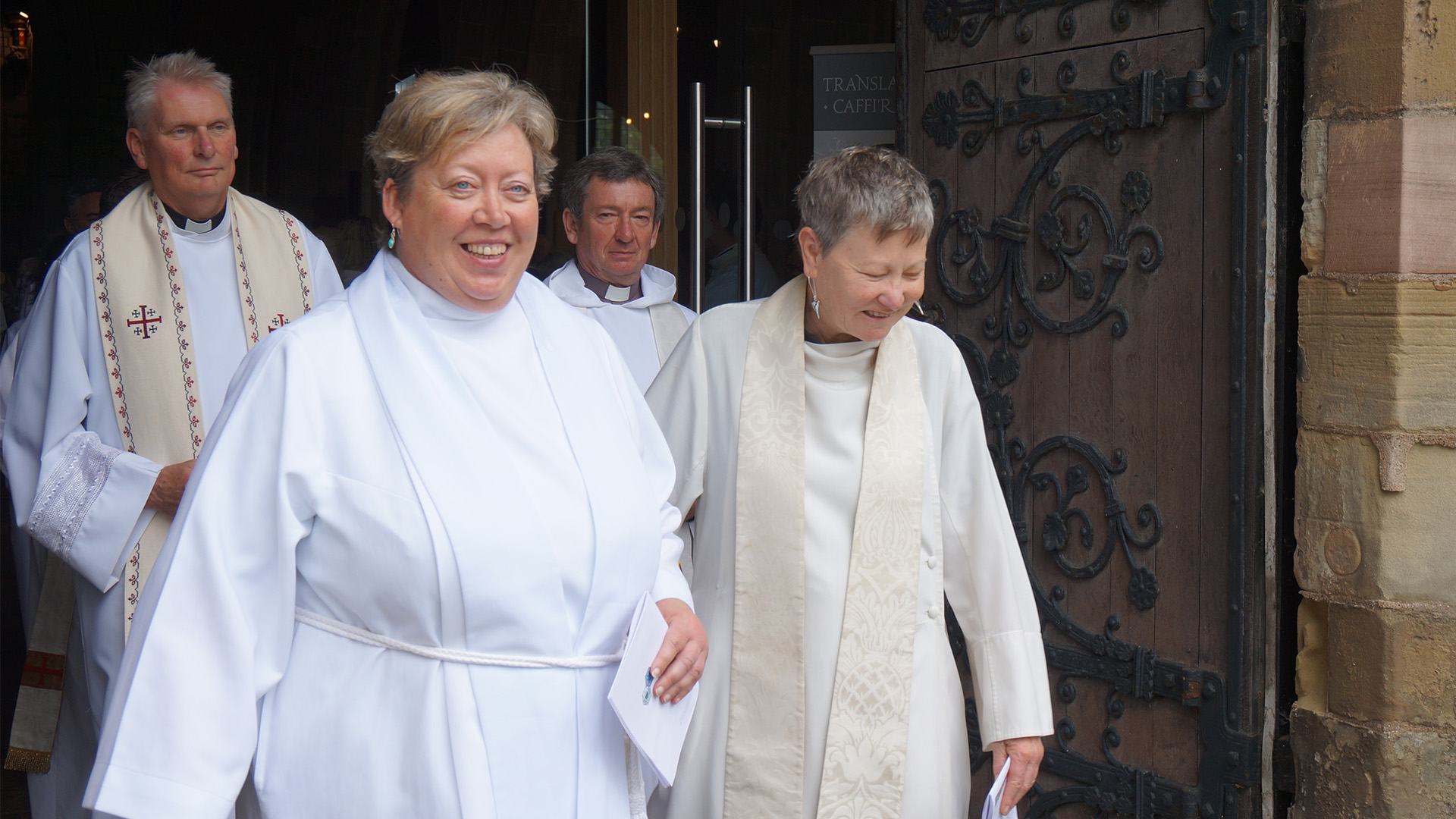
God calls people to a wide variety of ministries, both lay and ordained. In the Church in Wales, these include, for example, Apprentices, Pastoral Visitors, Worship Leaders, Licensed Lay Ministers (Readers, Chaplains and Evangelists), Pioneers, Deacons, and Priests. Here are some stories of people who are or have been training for ministry recently. Perhaps their story reflects your own? If so, please contact us to take the next steps on your faith journey. You can find contact details for the Ministry and Vocations Team at https://dioceseofstasaph.org.uk/diocesan-office/ministry-team/


Discernment for Locally Commissioned Ministry
 The Church in Wales affirms three forms of Locally Commissioned Lay Ministries. These are:
- Worship Leader
- Pastoral Assistant
- Catechist.
The call of individuals to these ministries is discerned and trained locally in your Mission Area.
The first step is to speak with your church leader about your sense of calling. They will help you explore the opportunities available within your Mission Area, and they might put you in touch with other commissioned ministers who can share their experience with you. This will be the start of your journey of discernment, where you will explore whether a Locally Commissioned Ministry is right for you.
If you are called to a Locally Commissioned Ministry, you will also need to do safeguarding training and a DBS check.
Discernment for Licenced Lay Ministry
 If you are discerning a call to be a Licensed Lay Minister, we will ask you to explore the qualities of Licensed Lay Ministry, to read and hear about Licensed Lay Ministry and to reflect with us. We will also ask you to undertake visits and placements so that you can see and experience the breadth of ministry and mission within the Church in Wales. Licenced Lay Ministry requires Provincial Training and a licence from the Diocesan Bishop.
There will be conversations with your Vocation’s Adviser and the Diocesan Officer for Licenced Lay Ministry. You will be invited to Diocesan Vocation’s days and evenings and there will be opportunities to journey with others who are exploring their vocation. The conversations, reading, placements and reflections may lead to attendance at a meeting with the Diocesan Bishop.
If you are called to a Licenced Lay Ministry, you will also need to do Safeguarding Training and a DBS check.
Discernment for Apprenticeship
The Apprenticeship programme is designed for those exploring a vocation in Christian Ministry (Chaplain, Priest, Youth and Children’s Pastor etc.) in any Christian denomination in Wales. It is primarily aimed at those who are aged 18 to 30. The apprenticeship training will be delivered by Coleg Sir Gâr and St Padarn’s Institute.
If you are called to an Apprenticeship in Christian Ministry, you will also need to do safeguarding training and a DBS check.
Discernment for ordained ministry as a distinctive deacon or priest
 If you are discerning a call to be a Distinctive Deacon or Priest, we will ask you to explore the qualities of the Diaconate and Priesthood and the ordination service (the Ordinal) to read and hear about ordained ministry and to reflect with us. We will ask you to undertake visits and placements so that you can see and experience the breadth of ministry and mission within the Church in Wales.
You will need to do safeguarding training and a DBS check. There will be probing questions about you and your life and faith. At times the process can feel like being asked to unpack your whole life and lay it out on a table to be examined, before having to put it all together again. However, this is important because God loves the whole person (not just the bits we think are OK) and it is the whole person who is ordained. Your Vocation’s Adviser will journey with you throughout the process and offer pastoral and spiritual support.
Alongside this pastoral and spiritual support, there will be a number of conversations with your Vocation’s Adviser and Diocesan Director of Ordinands (DDO). You will be invited to regular on-line meetings and to Diocesan Vocation’s days and evenings and there will be opportunities to journey with others who are exploring their vocation. The conversations, reading, placements and reflections may lead to the following.
Discernment Journey
Stage One: Carousel Conversations
When you and your DDO agree you are ready, you will attend a Stage One: Carousel Conversations Panel. As well as prayer and worship, the day includes online conversations which focus on your knowledge, skills, and readiness for ministry. Over a series of short, structured discussions with provincial discerners, you will explore key themes and qualities related to ministry. Following this panel, feedback will be provided to your Bishop, DDO and Vocation’s Adviser, offering guidance on how to prepare you to proceed to Stage Two. There is guidance about the Carousel Conversations here This document needs to be looked at with your DDO or your Vocation’s Adviser
Diocesan Discernment Panel
Following the Carousel Conversations, you can be invited to attend a Diocesan Discernment Panel. This will be a chance to reflect on the Carousel Conversations and meet the Diocesan Bishop. It also helps you to prepare for the Stage Two Provincial Discernment Panel.
Stage Two: Provincial Discernment Panel
Stage Two of the provincial discernment process involves a three-day panel. This includes in-depth interviews with provincial discerners, a group exercise, and a short reflection that you will deliver. The focus shifts towards exploring your personal qualities, capacity for growth, and readiness for ordination training. The process is framed by worship and prayer, ensuring a reflective and supportive environment. At the end of Stage Two, a report is sent to your Bishop, DDO and Vocation’s Adviser with recommendations on your next steps.
Frequently Asked Questions
about vocations
Do I have to be an academic:
No! There is academic work and you need to be able to learn and reflect and grow in your faith and your understanding of ministry and mission in the Church in Wales, but there are many ways to learn and reflect and grow and you don’t need to be an academic.
How long does it take?
We believe that the call to ministry is a big and important thing, and not something to be rushed. It often takes one to two years between your first conversation with a Vocation’s Adviser and the start of your training for Licenced Lay Ministry or Ordination, if the answers along the way are all positive. The standard training for Locally Commissioned Ministry is two months. The standard training for Licenced Lay Ministry is two years. The standard training for Ordination is three years.
Am I too young, or too old?
The youngest age you can be is 23, you can start your discernment when you are younger than 23. The oldest age at which you can be recommended for training for stipendiary ministry is 55. You can be recommended for training for non-stipendiary ministry if you are older, at the Bishop’s discretion. The youngest age at which you can start training for LLM ministry is 17 and you cannot be licenced as an LLM if you are older than 75.