Press Releases 27th February 2025
For St David’s Day, the Bishop of St Asaph asks, are our children being introduced to the spirituality which shaped Wales as a nation?
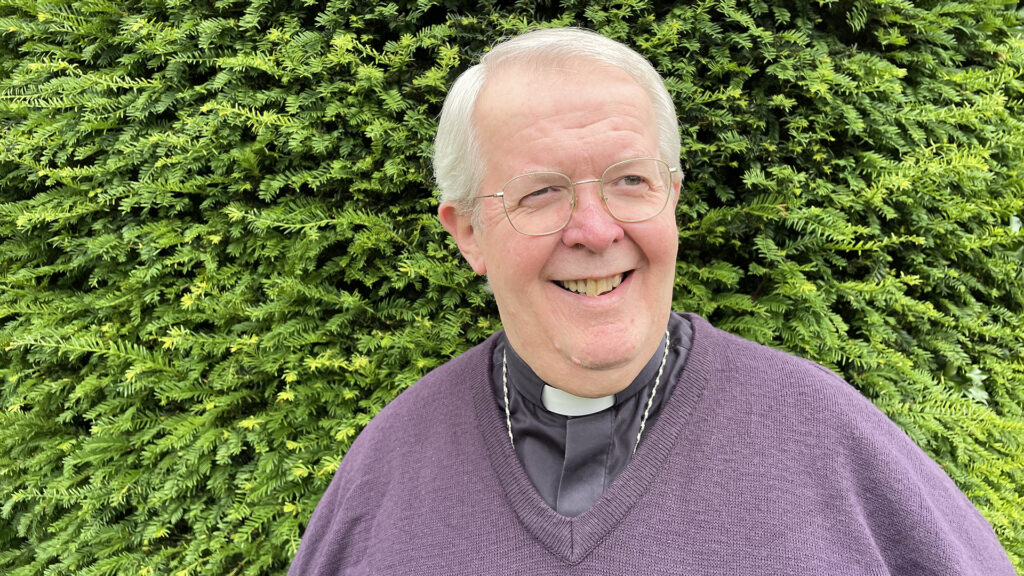
For St David’s Day, the Bishop of St Asaph asks, are our children being introduced to the spirituality which shaped Wales as a nation?
The Bishop of St Asaph has issued a St David’s Day letter encouraging all schools to introduce children to the spirituality which shaped Wales as a nation.
 The Rt Revd Gregory Cameron says in his letter, that the new curriculum in Wales for Religion Value and Ethics (RVE) should equip young people with “religious literacy by which they may understand the modern world.”
For him, the history of Wales and the Welsh cannot be told without reference to Christianity, and he gives examples in his letter which highlight the place of Christianity over the centuries. He says: “My firm belief is that the history of Wales and the Welsh cannot be told without reference to Christianity. Laid over our pre-Christian past, there is the Age of the Saints, the founding of our settlements and holy wells, the llanau and the sacred springs, all of which speak of the country being immersed in a spiritual awakening, deeply rooted in the revelation of God’s love in Christ.”
The Diocese of St Asaph looks after 49 Church in Wales Schools, including one shared faith secondary school in Wrexham. Bishop Gregory’s letter references the “best practice” provided by Church Schools to ensure that RE and History curricula do teach about the “churches in Wales”. He expresses concern that RVE “finds it easier to talk about Ethics than Religion.”
He says: “To omit the vast and diversified spiritual heritage that has been gifted to us by our forebears is to impoverish the coming generations, and I hope that in the world of Education, Religion will not be viewed as superstition, but as the crucible in which our nation was forged and by which it may be truly understood.”
You can read the Bishop of St Asaph’s letter in full in Welsh and English below.
The Diocese of St Asaph covers an area of north-east and Mid-Wales, stretching from Llandudno in the northwest to Newtown in the south and across to the Wales/England border. As well as 49 Church in Wales Schools, the diocese looks after more than 200 churches and local communities.
Bishop Gregory was elected Bishop of St Asaph in 2009. He has served as lead bishop on education, on doctrine and church liturgy and on ecumenism and interfaith relations. He has also worked closely with other organisations to support inclusion for homeless people and refugees. In 2016 Gregory established the UK’s first LGBTQIA Chaplaincy. He has served as Chair of the Commission of the Welsh Covenanted Churches, and is a trustee of Cytûn, Churches Together in Wales.
Neges Dydd Gŵyl Dewi gan Esgob Llanelwy
Nid oes y fath beth â chenedl ac iddi hanes syml. Er mwyn adrodd hanes cenedl yn gywir, mae angen sôn am lu o ddylanwadau, gwahanol rymoedd cymdeithasol ac economaidd, unigolion a mudiadau arwyddocaol, goresgynwyr estron a diwylliannau tramor, buddugoliaethau ac anawsterau, ac am ddylanwad daearyddiaeth, gwleidyddiaeth a’r hinsawdd.
Fodd bynnag, rwy’n credu’n gryf na ellir adrodd hanes Cymru na’r Cymry heb gyfeirio at Gristnogaeth. Mae sawl haen o Gristnogaeth i’w gosod dros ein gorffennol cyn-Gristnogol. Dyna i chi Oes y Seintiau, cyfnod sefydlu ein haneddiadau, ein ffynhonnau sanctaidd a’n llannau – hyn oll yn dangos i’r wlad gael ei throchi mewn deffroad ysbrydol, wedi’i ennyn gan y datguddiad o gariad Duw yng Nghrist. Ni ellir adrodd ein hanes chwaith heb ddeall dylanwad mynachaeth ar ein hanes canoloesol, a sut y brwydrodd y Diwygwyr Protestannaidd i gadw ein hiaith, er mwyn i’r Beibl gael ei esbonio mewn iaith yr oedd y bobl yn ei deall. Ni ellir amddifadu ein hanes o ddylanwad yr anghydffurfwyr cynnar, y Diwygiad Efengylaidd, y Methodistiaid Calfinaidd, Diwygiadau Pentecostaidd dechrau’r ugeinfed ganrif, a’r Eglwys yng Nghymru sydd wedi gwneud cyfraniad o’r newydd i ysbryd y genedl yn y can mlynedd diwethaf ers ei datgysylltu.
Mae ein Senedd wedi rhoi cwricwlwm Hanes newydd a phwnc newydd sef Crefydd, Gwerthoedd a Moeseg i blant Cymru. Ond ni fydd hynny’n werth dim heb iddynt gyflwyno ein plant i’r ysbrydolrwydd a’n lluniodd fel cenedl a sicrhau llythrennedd crefyddol iddynt, i’w helpu i ddeall y byd modern. Mae ein hysgolion Eglwys yn ymgorffori’r arferion gorau, ond ofnaf nad yw’r cwricwla Addysg Grefyddol na Hanes ledled y wlad yn dysgu llawer am eglwysi Cymru, a’i bod yn haws gan CGM sôn am Foeseg na Chrefydd. Trwy hepgor y dreftadaeth ysbrydol helaeth ac amrywiol a gyflwynwyd i ni gan ein cyndeidiau byddem yn tlodi’r cenedlaethau sydd i ddod. Rwy’n gobeithio na fydd byd Addysg yn edrych ar Grefydd fel ofergoeledd ond fel y pair y lluniwyd ein cenedl ynddo, ac fel cyfrwng i sicrhau dealltwriaeth wirioneddol ohoni.
Mae mwy i Ddydd Gŵyl Dewi na gwisg draddodiadol ddel a chennin Pedr, mae’n gyfle i gofio am yr hyn sy’n anadl einioes i’n cenedl ers canrifoedd. Dydd Gŵyl Dewi hapus!
St David’s Day Message from the Bishop of St Asaph
No nation has a simple history. To tell the history of a nation accurately is to recount a myriad of influences, of different social and economic forces, of significant individuals and movements, of foreign invaders and foreign cultures, of triumphs and setbacks, of geography, and politics and climate.
However, my firm belief is that the history of Wales and the Welsh cannot be told without reference to Christianity. Laid over our pre-Christian past, there is the Age of the Saints, the founding of our settlements and holy wells, the llanau and the sacred springs, all of which speak of the country being immersed in a spiritual awakening, deeply rooted in the revelation of God’s love in Christ. Our history cannot be told without an understandin of how monasticism shaped our mediaeval history, and how the Reformers fought to preserve our language, so that the Bible might be expounded in a language “understood by the people”. Our history cannot be denuded of the Great Awakening which came with the early nonconformists, and the Calvinistic Methodists, of the Pentecostal Revivals of the early twentieth century, and of the disestablished Church in Wales making a renewed contribution to the nation’s spirit in the last hundred years.
Our Senedd have gifted the children of Wales with a new curriculum for History and a new subject in Religion, Values and Ethics, but these initiatives will be worth nothing unless they introduce our children to the spirituality which shaped us and provide for them a religious literacy, by which they may understand the modern world. Our Church schools embody best practice, but I fear that RE and History curricula across the nation teach little about the churches of Wales, and that RVE finds it easier to talk about Ethics than Religion. To omit the vast and diversified spiritual heritage that has been gifted to us by our forebears is to impoverish the coming generations, and I hope that in the world of Education, Religion will not be viewed as superstition, but as the crucible in which our nation was forged and by which it may be truly understood.
To celebrate St David is not just about pretty national dress and daffodils, it is to remember the lifeblood that has coursed through our veins for centuries. Happy St David’s Day!